In your City, we only do pickups from Commercial Businesses.
Click here to lookup the nearest BestBuy.com location or Staples.com location for Easy Dropoff.
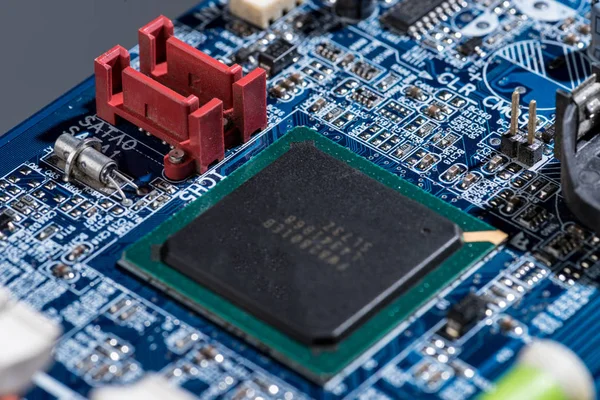
A central processing unit (CPU) is a hardware component that serves as the main computational unit of a computer, server, or other smart device. It is responsible for executing instructions, performing calculations, and processing data so the system can carry out tasks. Because it controls how information is handled and how operations are performed, the CPU is often referred to as the brain of the computer.
The CPU works with other hardware components to keep the device functioning properly. It processes input, helps manage data during active operations, and produces output that allows programs and applications to run. Also known as the central processor or main processor, it is one of the most important parts of any computing system because it largely determines overall speed, responsiveness, and performance.
The main components of a CPU are listed below:
The control unit is the part of the CPU that manages how instructions are processed and how data flows between different components. It decodes instructions, directs the operation of other parts of the processor, and ensures tasks are carried out in the correct order. In many ways, it acts as the coordinator of the CPU.
Its importance comes from its ability to organize and synchronize processor activity efficiently. By controlling timing, sequencing, and communication between components such as the ALU and memory, the control unit helps the processor execute instructions accurately and maintain smooth overall performance.
Registers are small, high-speed storage locations inside the CPU that temporarily hold data needed during processing. They store instructions, memory addresses, intermediate results, and other information that the processor must access quickly. Because they are built directly into the CPU, they provide much faster access than regular memory.
These storage areas are essential for efficient processing because they keep important data immediately available. Different types of registers serve different purposes, such as handling general data, tracking instruction flow, or storing control information, all of which help improve processing speed and responsiveness.
The Arithmetic Logic Unit (ALU) is the component of the CPU responsible for performing arithmetic and logical operations on data. It carries out tasks such as addition, subtraction, multiplication, division, and logical comparisons like AND, OR, and NOT. This makes it one of the core functional parts of the processor.
The ALU works closely with the control unit to process instructions and manipulate binary data. Its speed and capability directly affect overall CPU performance, since it is responsible for many of the calculations and logic-based decisions required in everything from basic computing tasks to more complex applications.
The Memory Management Unit (MMU) handles memory-related operations within the CPU. Its main job is to translate virtual memory addresses into physical memory addresses and control how data is accessed and stored. This helps the processor use memory accurately and efficiently.
The MMU also supports memory protection by controlling access to specific memory locations, which improves stability and data security. By helping organize memory flow and manage address translation, it plays an important role in overall system performance and reliability.
The clock is the component that synchronizes the operations of the CPU by generating regular electrical signals. These signals determine the timing of instruction execution and data movement within the processor, ensuring that all components operate in coordination.
Clock speed, usually measured in gigahertz (GHz), is one of the main indicators of processor performance. A faster clock generally allows the CPU to execute instructions more quickly, making the clock a critical part of how efficiently the processor performs computations.
The main features of a CPU are listed below:
Clock speed refers to how many instructions a CPU can execute per second and is measured in Hertz (Hz) or Gigahertz (GHz). It represents the rate at which the processor’s internal clock generates signals to coordinate operations. In general, a higher clock speed allows the CPU to process tasks more quickly, improving system responsiveness.
Advancements in processor technology have steadily increased clock speeds over time, with modern CPUs typically operating in the multi-gigahertz range. This feature is a key factor in overall performance because it directly affects how fast computations are carried out and how efficiently applications run.
Cores are individual processing units within a CPU that handle instructions and calculations. Each core operates independently and contains its own processing logic, allowing the CPU to perform multiple tasks at the same time. This ability improves multitasking and overall system performance.
Modern CPUs often include multiple cores, such as dual-core, quad-core, or even higher configurations. Increasing the number of cores allows systems to distribute workloads more efficiently, making them better suited for demanding applications and parallel processing tasks.
Cache is a high-speed memory built directly into the CPU that stores frequently used data and instructions. It allows the processor to access important information quickly without relying on slower main memory, which helps reduce delays and improve performance.
Cache is typically divided into levels such as L1, L2, and L3, each offering different speeds and capacities. By keeping commonly accessed data readily available, cache plays a major role in speeding up processing and enhancing the efficiency of the CPU.
The instruction set is the collection of commands that a CPU can understand and execute. These instructions include operations for arithmetic calculations, logical decisions, data movement, and control processes, all of which are encoded in binary form.
Different processors support different instruction sets, which influence compatibility and performance. The instruction set defines how software communicates with the hardware, making it a critical factor in determining what a CPU can do and how efficiently it performs tasks.
CPU architecture refers to the overall design and structure of the processor, including how its components are organized and how they interact. It defines how instructions are processed, how data flows, and how efficiently the CPU performs its operations.
The architecture also influences features such as core count, cache size, and processing efficiency. Advances in CPU architecture have led to faster, more powerful, and more energy-efficient processors, making it a key factor in modern computing performance.
Thermal Design Power (TDP) indicates the amount of heat a CPU generates under normal or heavy workloads, measured in watts. It helps determine the level of cooling required to keep the processor operating safely and efficiently.
CPUs with higher TDP values typically need more advanced cooling solutions to prevent overheating. This feature is important when building or maintaining systems, as proper thermal management ensures stable performance and longer hardware lifespan.
Hyper-Threading is a technology that allows a single CPU core to handle multiple threads simultaneously. By enabling one core to perform more than one task at a time, it improves efficiency and better utilizes available processing resources.
This feature enhances multitasking and system responsiveness, especially in applications that benefit from parallel processing. It effectively allows a processor to achieve higher performance without increasing the number of physical cores.
Overclocking is the process of increasing a CPU’s clock speed beyond its default settings to achieve better performance. This is typically done by adjusting system settings to allow the processor to run at higher frequencies.
While overclocking can improve speed and performance, it also increases heat output and may require enhanced cooling. It is commonly used by enthusiasts and professionals who need extra performance for demanding tasks.
Integrated graphics refer to a built-in graphics processing unit (GPU) within the CPU. This allows the system to handle basic visual tasks without needing a separate graphics card, which is useful for everyday computing and cost-efficient systems.
Although integrated graphics are not as powerful as dedicated GPUs, they are sufficient for general use, multimedia playback, and light gaming. They also help reduce power consumption and system complexity.
Power efficiency measures how effectively a CPU performs tasks while using minimal energy. It is often expressed as performance per watt, indicating how much work the processor can complete relative to its power consumption.
Efficient CPUs generate less heat, consume less electricity, and reduce operating costs, making them ideal for both personal devices and large-scale systems like servers. Improvements in design and manufacturing continue to enhance power efficiency in modern processors.
The central processing unit (CPU) is responsible for carrying out all the essential operations of a computer system. It processes input data, executes instructions, and produces output that allows applications and programs to function. At its core, the CPU performs arithmetic calculations and logical operations through the ALU, manages instruction flow using the control unit, and coordinates data movement between memory and other components.
Because it handles every task a computer performs, from launching applications to running system processes, the CPU plays a central role in overall functionality. Its performance depends on factors such as clock speed, number of cores, and cache size, all of which influence how efficiently it can process multiple tasks and respond to user actions.
A CPU operates through a continuous cycle known as the fetch-decode-execute process. First, it retrieves instructions from memory, then decodes them to determine what action is required, and finally executes those instructions. This cycle repeats rapidly, allowing the processor to handle millions or even billions of instructions per second.
During this process, the control unit directs operations, registers store temporary data, and the ALU performs calculations. The Memory Management Unit ensures correct data access, while the clock keeps everything synchronized. In multi-core processors, multiple instruction cycles can occur simultaneously, increasing efficiency and allowing the system to handle more tasks at once.
The CPU is one of the most important components in any computing device because it controls and executes all system operations. It determines how fast a computer can process information, run applications, and respond to commands, making it a key factor in overall performance.
As the central processing unit, it acts as the brain of the system, coordinating all hardware and software activities. Continuous advancements in CPU technology have significantly improved computing power, enabling modern devices to handle increasingly complex tasks with speed and efficiency.
Yes, CPUs can be disposed of by IT Asset Disposition (ITAD) companies. These organizations specialize in the secure and environmentally responsible handling of electronic equipment, including processors and other hardware components.
ITAD providers ensure that any data associated with the device is properly destroyed and that materials are recycled or reused when possible. This helps reduce electronic waste, protect sensitive information, and support sustainable disposal practices.
Yes, a CPU is an essential computer hardware component because it performs the core processing functions required for a system to operate. It executes instructions, performs calculations, and manages data flow, making it fundamental to all computing activities.
Without a CPU, a computer would not be able to run programs or perform any meaningful tasks. Its speed, efficiency, and overall capability directly affect system performance, making it one of the most critical parts of any computing device.