E‑waste Explained: Types, Importance, and History
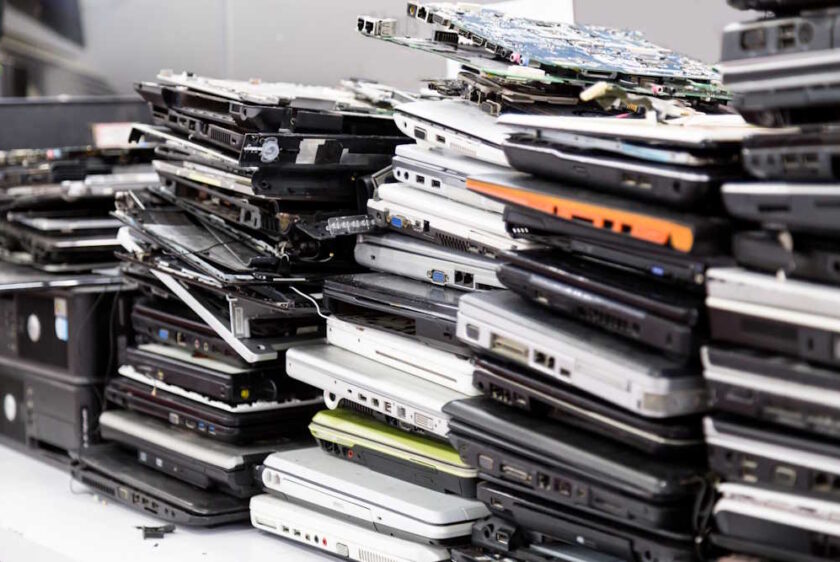
E-waste refers to discarded electronic devices such as phones, laptops, televisions, and appliances. Because technology becomes outdated quickly, the volume of e-waste in the United States continues to rise. This growing pile of discarded electronics is important because it contains recoverable materials like copper and gold, but also hazardous substances such as lead and mercury.
Improper disposal contaminates soil and water, while unsafe recycling methods release toxic fumes. At the same time, failing to recover metals wastes resources that are increasingly difficult to mine. The challenge is not only about disposal but also about protecting health and conserving materials.
Reducing harm requires extending device life through repair and reuse, using certified recycling programs, and encouraging manufacturers to design products that are easier to upgrade and recycle. IT Asset Disposition (ITAD) companies strengthen this process by securely handling data, ensuring compliance with regulations, and recovering value through refurbishment and resale. Their role connects environmental responsibility with business needs, showing how structured electronic waste recycling services management safeguards both natural resources and organizational interests.
We list the items that are considered e-waste below.
Smartphones and cell phones are classified as e‑waste once discarded because they contain circuits, lithium‑ion batteries, and display components that fall under regulated categories of electrical and electronic equipment. These devices are handheld communication tools that combine calling, messaging, internet access, cameras, sensors, and applications, making them central to modern life.
They are used by both individuals and businesses. Most households own more than one device, and many companies issue phones to employees for work. This widespread use makes smartphones one of the largest and fastest‑growing sources of e‑waste.
The environmental effects can be summarized as follows.
Recycling is carried out through the following steps.
Smartphones and cell phones are listed under small IT and telecommunication equipment. This means they must be collected and recycled through approved channels rather than being disposed of as ordinary trash.
Laptops are classified as e‑waste once discarded because they contain circuits, lithium‑ion batteries, and display components that fall under regulated categories of electrical and electronic equipment. A laptop is a portable personal computer with an integrated screen, keyboard, and rechargeable battery, designed for both mobility and productivity.
They are widely used by businesses, schools, and households. Companies issue laptops to employees for work, students rely on them for education, and individuals use them for communication, entertainment, and personal tasks.
Laptops are regulated under state‑level e‑waste programs, where they are typically classified as small IT and telecommunication equipment
Desktop computers are considered e‑waste once discarded because they contain electronic circuits, processors, memory modules, and power supplies that fall under regulated categories of electrical and electronic equipment. A desktop computer is a stationary personal computer designed for use at a desk, typically consisting of a tower case, monitor, keyboard, and mouse.
They are used by both businesses and households. Companies rely on desktops for office operations, while individuals use them for work, gaming, and personal tasks.
Desktop computers are regulated under state‑level e‑waste programs, where they are typically classified as large IT and telecommunication equipment. This requires proper collection, recycling, and reporting through approved channels rather than disposal as ordinary trash.
Computer monitors are considered e‑waste once discarded because they contain electronic circuits, display panels, and in older models, cathode ray tubes (CRTs) with leaded glass. A monitor is an external display device used to view output from a desktop, laptop, or server system.
They are used by both businesses and households. Offices rely on monitors for daily operations, while individuals use them for work, gaming, and entertainment.
Environmental impact depends on the type of computer monitor as stated below.
Recycling is carried out through the following steps.
Computer monitors are regulated under state‑level e‑waste programs, where they are typically classified as display equipment. This requires proper collection, recycling, and reporting through approved channels rather than disposal as ordinary trash.
Televisions are classified as e‑waste once discarded because they contain electronic circuits, display panels, and in older models, cathode ray tubes (CRTs) with leaded glass. A television is an electronic device designed to receive and display visual and audio signals for entertainment, news, and information.
They are used by households, businesses, schools, and public institutions. Nearly every home owns at least one television, and commercial spaces often use them for advertising or communication.
Environmental impact depends on the type of television as stated below.
Recycling is carried out through the following steps.
Televisions are regulated under state‑level e‑waste programs, where they are typically classified as display equipment. This requires proper collection, recycling, and reporting through approved channels rather than disposal as ordinary trash.
Servers are classified as e‑waste once decommissioned because they contain electronic circuits, processors, memory modules, storage drives, and power supplies that fall under regulated categories of electrical and electronic equipment. A server is a high‑performance computer designed to manage, store, and deliver data or applications to other devices across a network.
They are primarily used by businesses, data centers, government agencies, and institutions that require centralized computing power. Home use is rare, limited mostly to hobbyists or small labs.
The environmental effects can be summarized as follows.
Recycling is carried out through the following steps.
Servers are regulated under state‑level e‑waste programs, where they are typically classified as large IT and telecommunication equipment. This requires proper collection, recycling, and reporting through approved channels rather than disposal as ordinary trash.
Server racks are classified as e‑waste once they are no longer in use because they contain electronic components such as power distribution units, fans, and monitoring systems. A server rack is a metal enclosure designed to hold servers, switches, and other networking hardware. These are primarily used by businesses, data centers, and government institutions, with little use in homes.
Improper disposal creates environmental risks since racks combine metals, plastics, and electronics that release toxins if dumped or incinerated.
Server racks are regulated under state‑level e‑waste programs, where they are typically classified as large IT and telecommunication equipment. This requires proper collection, recycling, and reporting through approved channels rather than disposal as ordinary trash.
Network hardware such as switches, hubs, and routers is classified as e‑waste once discarded because these devices contain circuit boards, processors, and power supplies that fall under regulated categories of electrical and electronic equipment. A switch or hub connects multiple devices within a network, while a router directs traffic between networks and provides internet access.
They are used by businesses, data centers, schools, and households. Companies rely on enterprise‑grade switches and routers to manage large networks, while homes use smaller routers for internet connectivity.
Switches, hubs, and routers are regulated under state‑level e‑waste programs, where they are typically classified as small IT and telecommunication equipment. This requires proper collection, recycling, and reporting through approved channels rather than disposal as ordinary trash.
Circuit boards are classified as e‑waste once discarded because they contain electronic circuits, solder, and embedded components that fall under regulated categories of electrical and electronic equipment. A circuit board, often called a printed circuit board (PCB), is the foundation of most electronic devices, providing the pathways that connect chips, resistors, capacitors, and other components.
They are used in both businesses and households. Every computer, smartphone, television, medical device, and piece of network hardware relies on circuit boards, making them one of the most widespread forms of e‑waste.
Circuit boards are regulated under state‑level e‑waste programs. They are typically classified as small IT and telecommunication equipment or treated as embedded components of larger devices, requiring proper collection, recycling, and reporting through approved channels.
Hard drives are considered e‑waste once discarded because they contain electronic circuits, magnetic platters, and in some cases lithium batteries, all of which fall under regulated categories of electrical and electronic equipment. A hard drive is a data storage device used in computers, servers, and external enclosures to permanently store digital information.
They are used by both businesses and households. Companies rely on hard drives for storing sensitive data and running applications, while individuals use them in desktops, laptops, and external storage devices.
Hard drives are regulated under state‑level e‑waste programs. They are typically classified as small IT and telecommunication equipment or treated as embedded components of larger devices, requiring proper collection, recycling, and reporting through approved channels.
Medical imaging equipment is classified as e‑waste once decommissioned because it contains electronic circuits, high‑voltage components, and hazardous materials that fall under regulated categories of electrical and electronic equipment. This category includes devices such as X‑ray machines, CT scanners, MRI systems, and ultrasound units, all designed to capture internal images of the human body for diagnosis and treatment.
The main users are hospitals, diagnostic centers, and specialized clinics. These machines are rarely found in homes due to their size, cost, and technical requirements.
Medical imaging equipment is regulated under state‑level e‑waste programs, where it is typically classified as large medical devices. This requires regulated collection, recycling, and reporting through approved channels rather than disposal as ordinary waste.
Dialysis machines are classified as e‑waste once decommissioned because they contain electronic circuits, pumps, sensors, and power systems that fall under regulated categories of electrical and electronic equipment. A dialysis machine is a medical device that filters and purifies the blood of patients whose kidneys are not functioning properly.
Dialysis machines are used in hospitals, dialysis centers, and specialized clinics. These machines are not used in typical households due to their size, cost, and the need for professional operation.
The environmental effects can be summarized as follows.
Recycling is carried out through the following steps.
Dialysis machines are regulated under state‑level e‑waste programs, where they are typically classified as large medical devices. This requires regulated collection, recycling, and reporting through approved channels rather than disposal as ordinary waste.
Defibrillators are classified as e‑waste once decommissioned because they contain electronic circuits, batteries, capacitors, and monitoring systems that fall under regulated categories of electrical and electronic equipment. A defibrillator is a medical device designed to deliver an electric shock to the heart in order to restore a normal rhythm during cardiac arrest.
Defibrillators are used in hospitals, clinics, emergency medical services, and in some cases businesses or public facilities that keep automated external defibrillators (AEDs) for emergencies. Home use is rare but possible with portable AEDs.
Defibrillators are regulated under state‑level e‑waste programs, where they are typically classified as large medical devices. This requires regulated collection, recycling, and reporting through approved channels rather than disposal as ordinary waste.
Autoclaves are classified as e‑waste once decommissioned because they contain electronic control systems, heating elements, sensors, and power units that fall under regulated categories of electrical and electronic equipment. An autoclave is a medical and laboratory device that uses high‑pressure steam to sterilize instruments, equipment, and materials.
Autoclaves are used in hospitals, laboratories, research facilities, and clinics. They are rarely found in homes due to their size, cost, and specialized function.
Autoclaves are regulated under state‑level e‑waste programs, where they are typically classified as large medical devices. This requires regulated collection, recycling, and reporting through approved channels rather than disposal as ordinary waste.
Printers are considered e‑waste once discarded because they contain electronic circuits, motors, wiring, and consumables such as toner or ink cartridges that fall under regulated categories of electrical and electronic equipment. A printer is a device that produces hard copies of digital documents, images, or graphics, using inkjet, laser, or thermal technology.
Printers are widely used by businesses, schools, government offices, and households. Offices rely heavily on printers for documentation, while home users employ them for personal, educational, or small business needs.
Printers are regulated under state‑level e‑waste programs, where they are typically classified as small IT and telecommunication equipment or consumer electronics. This requires regulated collection, recycling, and reporting through approved channels rather than disposal as ordinary trash.
Copiers are classified as e‑waste once discarded because they contain electronic circuits, motors, scanners, and consumables such as toner cartridges that fall under regulated categories of electrical and electronic equipment. A copier is a machine that reproduces documents and images onto paper, often using laser or digital imaging technology.
Copiers are used by businesses, schools, government offices, and print shops. While some households may own small multifunction printers with copying features, large standalone copiers are primarily used in professional and institutional settings.
The environmental effects can be summarized as follows.
Recycling is carried out through the following steps.
Copiers are regulated under state‑level e‑waste programs, where they are typically classified as large IT and telecommunication equipment or office electronics. This requires regulated collection, recycling, and reporting through approved channels rather than disposal as ordinary trash.
Fax machines are considered e‑waste once discarded because they contain electronic circuits, motors, scanners, and consumables such as toner or ink cartridges that fall under regulated categories of electrical and electronic equipment. A fax machine is a device that scans documents, transmits them over a telephone line, and prints a copy at the receiving end.
Fax machines are used by businesses, government offices, and some medical institutions where faxing remains a secure communication method. Household use has declined sharply with the rise of email and digital document sharing.
Fax machines are regulated under state‑level e‑waste programs, where they are typically classified as small IT and telecommunication equipment or office electronics. This requires regulated collection, recycling, and reporting through approved channels rather than disposal as ordinary trash.
UPS systems are classified as e‑waste once discarded because they contain electronic circuits, transformers, and large rechargeable batteries, all of which fall under regulated categories of electrical and electronic equipment. A UPS is a backup power device that provides short‑term electricity during outages and protects sensitive equipment from power fluctuations.
UPS Systems are used by businesses, data centers, hospitals, and government institutions that require continuous power for critical operations. Smaller UPS units are also used in households to protect computers and home networking equipment.
The environmental effects can be summarized as follows.
Recycling is carried out through the following steps.
UPS systems are regulated under state‑level e‑waste programs, where they are typically classified as large IT and telecommunication equipment or power supply equipment. This requires regulated collection, recycling, and reporting through approved channels rather than disposal as ordinary trash.
Power Distribution Units (PDUs) are classified as e‑waste once discarded because they contain electronic circuits, wiring, and sometimes monitoring systems that fall under regulated categories of electrical and electronic equipment. A PDU is a device used in data centers, server rooms, and IT environments to distribute electrical power from a UPS (Uninterruptible Power Supply) or main source to multiple servers, networking devices, and other equipment.
PDUs are used in businesses, data centers, and IT facilities. While households may use simple power strips, enterprise‑grade PDUs are designed for professional environments.
PDUs are regulated under state‑level e‑waste programs, where they are typically classified as large IT and telecommunication equipment or power supply equipment. This requires regulated collection, recycling, and reporting through approved channels rather than disposal as ordinary trash.
Power supplies and power strips are classified as e‑waste once discarded because they contain electronic circuits, transformers, capacitors, and wiring that fall under regulated categories of electrical and electronic equipment. A power supply converts electricity from a wall outlet into usable voltage for devices, while a power strip distributes electricity to multiple devices at once, sometimes with surge protection.
Power supplies and power strips are used by both businesses and households. Offices and data centers rely on power supplies and strips to run IT equipment, while homes use them for computers, entertainment systems, and appliances.
Power supplies and power strips are regulated under state‑level e‑waste programs, where they are typically classified as small IT and telecommunication equipment or electrical accessories. This requires regulated collection, recycling, and reporting through approved channels rather than disposal as ordinary trash.
Audio and video equipment is classified as e‑waste once discarded because it contains electronic circuits, wiring, plastics, and sometimes batteries or optical components that fall under regulated categories of electrical and electronic equipment. This category includes stereos, DVD and Blu‑ray players, and video game consoles.
The main users are households, schools, entertainment venues, and businesses. Homes use them for leisure and communication, while institutions and businesses may use them for presentations, training, or customer engagement.
Audio and video equipment is regulated under state‑level e‑waste programs, where it is typically classified as consumer electronics or small IT and telecommunication equipment. This requires regulated collection, recycling, and reporting through approved channels rather than disposal as ordinary trash.
Microwaves are considered e‑waste once discarded because they contain electronic circuits, wiring, motors, and hazardous components such as capacitors and heavy metals that fall under regulated categories of electrical and electronic equipment. A microwave oven is a household appliance that uses electromagnetic radiation to heat and cook food quickly, typically including a magnetron, control boards, and a protective casing.
Microwaves are commonly used in households, where microwaves are common for everyday cooking, and businesses such as restaurants, offices, schools, and hospitals that rely on them for quick food preparation.
Microwaves are regulated under state‑level e‑waste programs, where they are typically classified as large household appliances. This requires regulated collection, recycling, and reporting through approved channels rather than disposal as ordinary trash.
Electric cookers are considered e‑waste once discarded because they contain electronic circuits, heating elements, wiring, and sometimes digital control panels that fall under regulated categories of electrical and electronic equipment. An electric cooker is a household appliance designed to cook food using electricity, often including stovetop burners, ovens, or rice‑cooking functions.
Electric cookers are used in households, where they are common for daily meal preparation, and businesses such as restaurants, cafeterias, and catering services that rely on them for large‑scale cooking.
Electric cookers are regulated under state‑level e‑waste programs, where they are typically classified as large household appliances. This requires regulated collection, recycling, and reporting through approved channels rather than disposal as ordinary trash.
Heaters are considered e‑waste once discarded because they contain electrical circuits, heating elements, wiring, and sometimes digital control systems that fall under regulated categories of electrical and electronic equipment. A heater is an appliance designed to generate and distribute heat, either through electric resistance coils, infrared elements, or fan‑assisted systems.
Heaters are used in households, where heaters are used for personal comfort, and businesses such as offices, hotels, and industrial facilities that rely on them for climate control and worker safety.
The environmental effects can be summarized as follows.
Recycling is carried out through the following steps.
Heaters are regulated under state‑level e‑waste programs, where they are typically classified as large household appliances. This requires regulated collection, recycling, and reporting through approved channels rather than disposal as ordinary trash.
Fans are considered e‑waste once discarded because they contain electric motors, wiring, switches, and sometimes electronic control boards that fall under regulated categories of electrical and electronic equipment. A fan is an appliance designed to circulate air for cooling or ventilation, typically consisting of a motor, blades, and a protective casing.
Fans are used in households, and businesses such as offices, schools, factories, and commercial spaces that rely on them for air circulation and worker safety.
The environmental effects can be summarized as follows.
Recycling is carried out through the following steps.
Fans are regulated under state‑level e‑waste programs, where they are typically classified as large household appliances or small household appliances depending on their size. This requires regulated collection, recycling, and reporting through approved channels rather than disposal as ordinary trash.
Wearables such as smart watches and fitness trackers are considered e‑waste once discarded because they contain electronic circuits, sensors, rechargeable lithium batteries, and wireless communication modules that fall under regulated categories of electrical and electronic equipment. A wearable is a compact, body‑worn device designed to track health metrics, display notifications, or provide interactive functions through integration with smartphones and other digital platforms.
The main users of wearables are households and individuals, particularly consumers interested in fitness, health monitoring, and convenience. Businesses also use them in wellness programs, healthcare monitoring, and workforce productivity initiatives.
The environmental effects can be summarized as follows.
Recycling is carried out through the following steps.
Wearables are regulated under state‑level e‑waste programs, where they are typically classified as small IT and telecommunication equipment or consumer electronics. This requires regulated collection, recycling, and reporting through approved channels rather than disposal as ordinary trash.
Heart monitors are considered e‑waste once discarded because they contain electronic circuits, sensors, batteries, and sometimes wireless communication modules that fall under regulated categories of electrical and electronic equipment. A heart monitor is a medical device used to track and record heart activity, either continuously or at intervals, and can range from portable Holter monitors to wearable consumer devices.
Heart monitors are used in hospitals, clinics, and healthcare professionals for patient diagnostics, as well as individuals who use personal or wearable heart monitors at home for fitness or medical reasons.
The environmental effects can be summarized as follows.
Recycling is carried out through the following steps.
Heart monitors are regulated under state‑level e‑waste programs, where they are typically classified as small IT and telecommunication equipment or medical electronic devices. This requires regulated collection, recycling, and reporting through approved channels rather than disposal as ordinary trash.
Diabetic testing equipment is considered e‑waste once discarded because it contains electronic circuits, sensors, and batteries that fall under regulated categories of electrical and electronic equipment. This category includes blood glucose meters, continuous glucose monitors, and digital lancet systems, all designed to measure and track blood sugar levels.
Diabetic Testing Equipment are used by individuals with diabetes who rely on them for daily health management, as well as hospitals, clinics, and pharmacies that provide testing services or distribute the devices.
The environmental effects can be summarized as follows.
Recycling is carried out through the following steps.
Diabetic testing equipment is regulated under state‑level e‑waste programs, where it is typically classified as small medical electronic devices. This requires regulated collection, recycling, and reporting through approved channels rather than disposal as ordinary trash.
Cords and cables are considered e‑waste once discarded because they contain conductive metals such as copper or aluminum, insulation made from plastics with flame‑retardant chemicals, and sometimes embedded electronic components like ferrite beads or surge protectors. A cord or cable is a device used to transmit electrical power or data between equipment, including power cords, USB cables, HDMI, Ethernet, and specialized industrial wiring.
Both households and businesses used cords and cables, since nearly every electronic device requires cords or cables for power or connectivity.
The environmental effects can be summarized as follows.
Recycling is carried out through the following steps.
Cords and cables are regulated under state‑level e‑waste programs, where they are typically classified as small IT and telecommunication equipment or electrical accessories. This requires regulated collection, recycling, and reporting through approved channels rather than disposal as ordinary trash.
WiFi dongles are considered e‑waste once discarded because they contain electronic circuits, USB connectors, and small integrated chips that fall under regulated categories of electrical and electronic equipment. A WiFi dongle is a compact device that plugs into a computer or other hardware to provide wireless internet connectivity, often used as a portable alternative to built‑in network cards.
WiFi dongles are used in households and individuals who need mobile internet access, as well as businesses that rely on them for backup connectivity, remote work, or temporary setups where wired connections are not available.
The environmental effects can be summarized as follows.
Recycling is carried out through the following steps.
WiFi dongles are regulated under state‑level e‑waste programs, where they are typically classified as small IT and telecommunication equipment. This requires regulated collection, recycling, and reporting through approved channels rather than disposal as ordinary trash.
Remote controls are considered e‑waste once discarded because they contain electronic circuits, infrared transmitters, and batteries that fall under regulated categories of electrical and electronic equipment. A remote control is a handheld device used to wirelessly operate televisions, stereos, air conditioners, projectors, and other appliances.
Remote controls are common in households, where remotes are standard for entertainment and home appliances, and businesses such as hotels, offices, and schools that rely on them for presentations, guest services, and equipment management.
Remote controls are regulated under state‑level e‑waste programs, where they are typically classified as small IT and telecommunication equipment or consumer electronics. This requires regulated collection, recycling, and reporting through approved channels rather than disposal as ordinary trash.
Television remotes are considered e‑waste once discarded because they contain electronic circuits, infrared transmitters, and batteries that fall under regulated categories of electrical and electronic equipment. A television remote is a handheld device used to wirelessly control TVs and related entertainment systems, typically powered by disposable or rechargeable batteries.
Television remotes are used in households, where remotes are standard for televisions and media devices, and businesses such as hotels, offices, and schools that rely on them for presentations, guest services, and equipment management.
The environmental effects can be summarized as follows.
Recycling is carried out through the following steps.
Television remotes are regulated under state‑level e‑waste programs, where they are typically classified as small IT and telecommunication equipment or consumer electronics. This requires regulated collection, recycling, and reporting through approved channels rather than disposal as ordinary trash.
Lamps are considered e‑waste once discarded because they contain electrical components, wiring, and in many cases hazardous substances such as mercury, lead, or flame‑retardant plastics. A lamp is a device designed to produce light, including incandescent bulbs, fluorescent tubes, compact fluorescent lamps (CFLs), and LED lamps.
Lamps are used in households, offices, schools, hospitals, and businesses that require lighting for daily operations. Street lighting and industrial facilities also rely heavily on specialized lamps.
Lamps are regulated under state‑level e‑waste programs, where they are typically classified as lighting equipment. This requires regulated collection, recycling, and reporting through approved channels rather than disposal as ordinary trash.
Smart lights are considered e‑waste once discarded because they contain electronic circuits, wireless communication modules, sensors, and LED drivers that fall under regulated categories of electrical and electronic equipment. A smart light is a network‑enabled lighting device, usually LED‑based, that can be controlled remotely through apps, voice assistants, or automation systems.
Smart lights are used in households that adopt them for convenience and energy efficiency, and businesses such as offices, hotels, and retail spaces that use them for smart building management and energy savings.
The environmental effects can be summarized as follows.
Recycling is carried out through the following steps.
Smart lights are regulated under state‑level e‑waste programs, where they are typically classified as lighting equipment. This requires regulated collection, recycling, and reporting through approved channels rather than disposal as ordinary trash.
Night lights are considered e‑waste once discarded because they contain electrical circuits, wiring, LED or incandescent bulbs, and sometimes light sensors or timers that fall under regulated categories of electrical and electronic equipment. A night light is a small, low‑wattage lighting device designed to provide dim illumination in dark areas, often for safety, comfort, or convenience.
Night lights are used in households, where they are commonly used in bedrooms, hallways, and bathrooms, as well as businesses such as hotels, hospitals, and care facilities that use them to improve safety and accessibility at night.
The environmental effects can be summarized as follows.
Recycling is carried out through the following steps.
Night lights are regulated under state‑level e‑waste programs, where they are typically classified as lighting equipment. This requires regulated collection, recycling, and reporting through approved channels rather than disposal as ordinary trash.
Massage chairs are considered e‑waste once discarded because they contain electronic circuits, motors, wiring, sensors, and sometimes rechargeable batteries that fall under regulated categories of electrical and electronic equipment. A massage chair is a large household or commercial appliance designed to provide automated massage functions using rollers, vibration, and heating elements, often controlled by an electronic interface.
Massage chairs are used in households that purchase them for personal comfort and wellness, as well as businesses such as spas, gyms, hotels, and clinics that use them for customer service and therapeutic purposes.
The environmental effects can be summarized as follows.
Recycling is carried out through the following steps.
Massage chairs are generally categorized as large household appliances or electronic wellness equipment. They must be collected, recycled, and reported through approved channels rather than being disposed of as ordinary trash.
Heating pads are considered e‑waste once discarded because they contain electrical wiring, heating elements, control circuits, and sometimes digital timers or rechargeable batteries that fall under regulated categories of electrical and electronic equipment. A heating pad is a small appliance designed to provide localized heat therapy, often used for pain relief, muscle relaxation, or comfort.
Heating pads are used in households, where individuals use them for personal health and wellness, and businesses such as clinics, hospitals, spas, and physical therapy centers that rely on them for patient care and therapeutic treatments.
Heating pads are generally categorized as small household appliances or small medical electronic devices. They must be collected, recycled, and reported through approved channels rather than being disposed of as ordinary trash.
Treadmills are considered e‑waste once discarded because they contain motors, electronic control panels, wiring, sensors, and sometimes digital connectivity modules that fall under regulated categories of electrical and electronic equipment. A treadmill is a fitness machine designed for walking, jogging, or running indoors, powered by an electric motor that drives a moving belt.
Treadmills are used in households that purchase them for personal exercise, and businesses such as gyms, fitness centers, hotels, and rehabilitation clinics that rely on them for customer service and health programs.
The environmental effects can be summarized as follows.
Recycling is carried out through the following steps.
Treadmills are generally categorized as large household appliances or electronic fitness equipment. They must be collected, recycled, and reported through approved channels rather than being disposed of as ordinary trash.
Home entertainment devices are considered e‑waste once discarded because they contain electronic circuits, wiring, plastics, and sometimes hazardous components such as batteries or optical drives. This category includes televisions, DVD and Blu‑ray players, gaming consoles, streaming boxes, and stereo systems. These devices are designed to provide audio‑visual entertainment and digital media access.
The main users are households, where they are common for leisure and communication, and businesses such as hotels, schools, and entertainment venues that use them for guest services, presentations, or customer engagement.
Home entertainment devices are generally categorized as consumer electronics or small IT and telecommunication equipment. They must be collected, recycled, and reported through approved channels rather than being disposed of as ordinary trash.
E‑waste is important because it is both an environmental challenge and a valuable economic resource. Discarded electronics contain high concentrations of precious and industrial metals such as gold, silver, copper, aluminum, and rare earth elements. Recovering these materials through recycling is far more efficient than mining new ore, which reduces costs and lessens the strain on natural resources. For example, a ton of smartphones can yield more gold than a ton of mined rock, making e‑waste an “urban mine” with enormous potential.
E‑waste also supports the circular economy by keeping valuable resources in use and reducing dependence on finite reserves. Copper recovered from discarded cables is reused in renewable energy systems and electric vehicles, while aluminum from casings is reintroduced into construction and manufacturing. At the same time, the recycling industry generates jobs and stimulates local economies. Large‑scale e‑waste recovery has been shown to create thousands of employment opportunities while adding billions in economic activity. In this way, e‑waste is not just waste but a strategic resource that strengthens supply chains, reduces environmental harm, and drives economic growth.
The history of e‑waste begins in the mid‑20th century, when electronics like radios and televisions became common. At first, devices were expensive and durable, so they were repaired rather than discarded.
By the 1970s–1980s, electronics grew cheaper and more widespread, leading to the first wave of discarded devices. Laws such as the U.S. Resource Conservation and Recovery Act (1976) and the rise of personal computers highlighted the growing waste problem.
In the 1990s–2000s, rapid innovation in mobile phones, laptops, and gaming consoles shortened product lifespans. The Basel Convention (1989) and the EU WEEE Directive (2003) marked global recognition of e‑waste as a regulated issue.
From the 2010s to today, e‑waste has become the fastest‑growing waste stream worldwide, reaching over 50 million metric tons annually. Modern devices are smaller, harder to repair, and replaced quickly, making e‑waste both a pressing environmental challenge and a driver for circular economy solutions.
E‑waste refers to discarded electronic devices and components that have reached the end of their useful life and require proper disposal or recycling to prevent environmental harm.
ITAD (IT Asset Disposition) is a structured process for securely retiring, repurposing, or recycling IT equipment. Its focus is on data security, regulatory compliance, and value recovery (resale, parts harvesting, certified recycling), while e‑waste recycling focuses mainly on safe material recovery and disposal.